Last year I somehow became the unofficial visa advisor in my circle. It started when my younger brother asked me to help him with his UK work visa application. Then a colleague heard about it and asked for help with her Canada visitor visa. Then two more friends came to me for their Schengen applications and one family member needed help with an Australia skilled worker visa.
Five applications total across four different countries. Three got approved. Two got refused.
I want to be upfront about that. I am not sharing this as some kind of success story where everything worked out perfectly. Two people I helped did not get what they applied for and that bothered me enough to spend a lot of time afterward figuring out exactly where things went wrong.
What I learned from comparing those five cases side by side is genuinely useful in a way that no official guide ever was for me. Because the differences between the approvals and the refusals were not always the obvious things. Sometimes the person with the weaker background on paper got approved and the person with stronger credentials got refused. And when I dug into why that kept happening the same patterns came up every time.
The Five Cases and What Happened
Let me give you a quick picture of each person because the context matters when you understand what separated the outcomes.
My brother applied for a UK Skilled Worker Visa. He had a confirmed job offer from a registered UK sponsor, a clean travel history and solid financial documents. Approved in four weeks.
My colleague applied for a Canada Visitor Visa. She had a stable job, decent savings and a genuine reason to visit which was attending a professional conference. Refused on the grounds of insufficient ties to home country.
The first Schengen application was for a friend visiting family in Germany for three weeks. He had an invitation letter from his sister who is a German resident, travel insurance and enough funds. Approved in eleven days.
The second Schengen application was for another friend wanting to do a two week holiday in Italy and France. She had more money in her account than the first friend, a longer travel history and a cleaner application on paper. Refused without a detailed explanation beyond the standard insufficient documentation response.
The Australia skilled worker visa was for a family member in the engineering field. This one took four months but eventually came through with a successful state nomination.
Three approvals. Two refusals. And when I laid all five cases out side by side the reasons became much clearer than they seemed at the time.

What the Approved Applications Had in Common
The three applications that went through successfully shared something that I did not fully appreciate until I compared them against the refused ones.
Every approved application told a complete and consistent story without any gaps that needed the visa officer to fill in with assumptions.
My brother’s UK application was strong not just because he had all the documents but because every document reinforced the same narrative. He had a job offer that explained why he was going. He had financial history that showed he was a stable employed person. He had a clean passport with previous travel showing he had left countries on time before. The whole application answered every possible question before it could even be asked.
The friend applying for the Schengen to visit family had an invitation letter that explained exactly who he was visiting and why. He had accommodation confirmed. He had a return flight booked. He had insurance covering the exact dates. Nothing was left open ended.
The Australia application succeeded largely because my family member had taken the time to understand exactly which visa stream applied to his situation and built the application entirely around the specific requirements of that stream rather than submitting a general application and hoping it fit.
In all three cases the applications did not just meet the requirements. They anticipated the questions and answered them proactively.
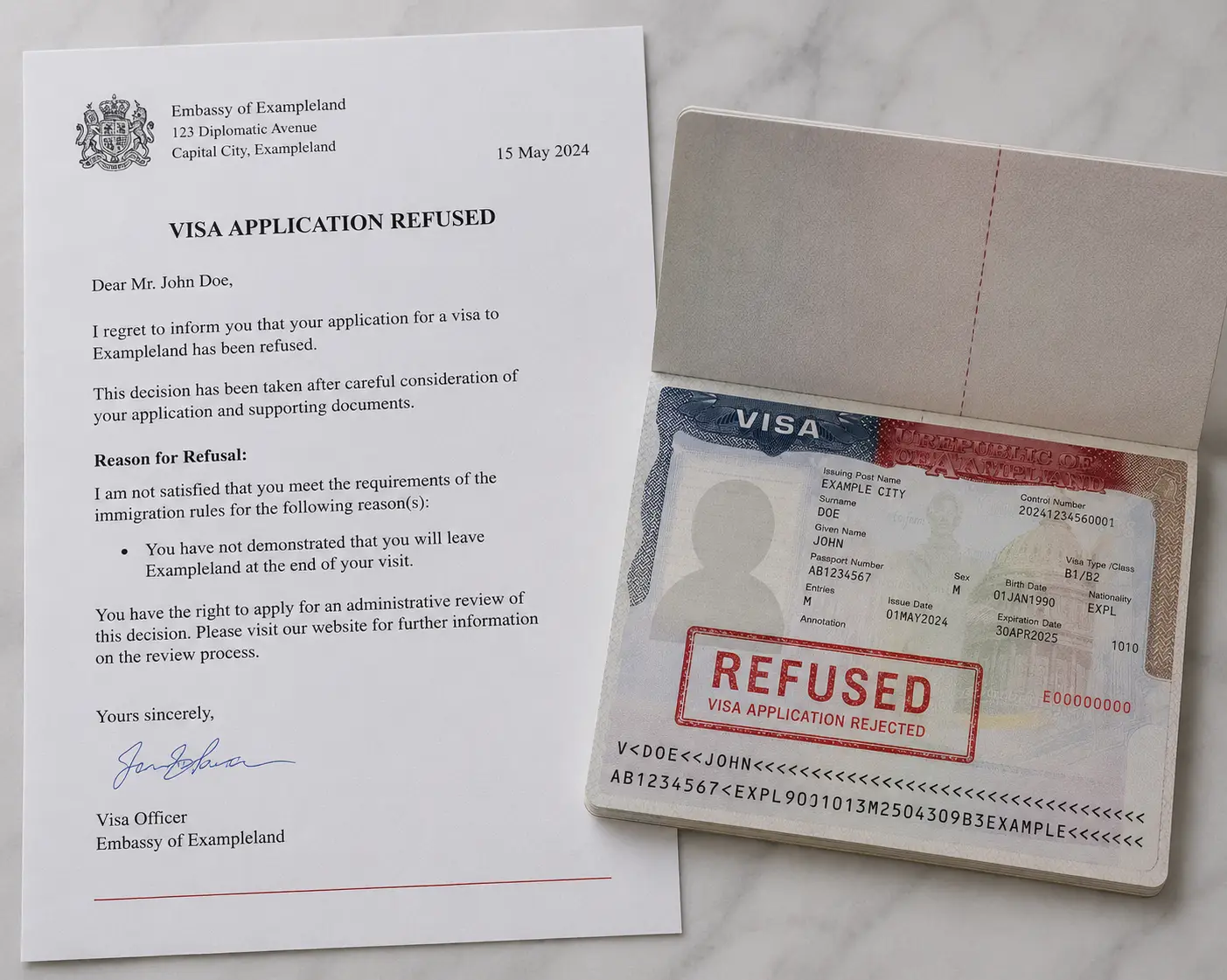
What the Refused Applications Were Missing
This is the harder part to talk about but it is also the most useful part.
My colleague’s Canada visitor visa refusal came down to ties to home country and I can see now exactly why the officer made that call. She was in her late twenties, unmarried, renting rather than owning property, and her job was a contract position rather than a permanent one. On paper all of that together creates a profile that a visa officer reads as someone with limited reasons to return.
The cruel irony is that she had absolutely no intention of staying. She genuinely just wanted to attend a conference. But intention cannot be verified. Documentation of ties can be. And her documentation of ties was thin.
She had not included a letter from her employer confirming her contract renewal and the expectation of continued employment. She had not included anything about her family situation at home, her parents who she lived near, her social commitments. She had savings but the account history only went back six weeks because she had recently switched banks and did not think to get a statement from the old account as well.
Each of those gaps individually might not have been enough to cause a refusal. Together they painted a picture that the officer was not comfortable approving.
The second Schengen refusal was different in nature. My friend’s application for the Italy and France holiday was actually well documented financially. What it lacked was a clear and specific itinerary with confirmed bookings. She had researched the trip and knew roughly what she wanted to do but had not booked accommodation or specific activities yet because she wanted to wait until the visa was approved before spending money.
That is completely understandable logic. But from the visa officer’s perspective an application without confirmed accommodation and a specific day by day plan for a holiday visa is an incomplete picture of the trip. The refusal letter referenced insufficient documentation of travel plans and that was exactly it.
She rebooked with a refundable hotel reservation, added a detailed itinerary and reapplied two months later. Approved.
The Pattern That Kept Showing Up
Across all five cases the single most consistent thing I noticed was this. The applications that succeeded were built by people who thought about the visa officer’s perspective before they submitted. The applications that failed were built by people who thought about their own perspective and assumed the officer would fill in the gaps with common sense.
Visa officers are not filling in gaps with common sense. They are making decisions based on what is in front of them. Anything not documented is anything not considered.
This sounds obvious when you say it out loud. But it is remarkably easy to fall into the trap of thinking that because you know your intentions are genuine the application will communicate that on its own. It will not. An application only communicates what you put into it.
What I Now Tell Everyone Before They Apply
After going through all five of these experiences I have a short list of things I tell anyone who asks me to look over their visa application before they submit.
Read your application as if you are the officer and you have never met this person. Does the application make sense on its own without any outside knowledge? Does it answer the core questions about who this person is, why they are going, what they will do there and why they will come back?
Document your ties to home country specifically and deliberately. Do not assume the officer will infer them from other parts of the application. Make them explicit. An employer letter. Property documents. Family situation. Ongoing financial commitments. Whatever applies to your situation needs to be there in black and white.
Check your bank statement history not just your current balance. Three to six months of consistent financial activity tells a much stronger story than a healthy current balance with no history behind it. If you have recently switched banks get statements from both accounts.
Book refundable accommodation and transport before applying for short term visit visas. Yes it costs a little to hold the bookings. Yes you can cancel if something goes wrong. But confirmed bookings transform a vague travel plan into a specific documented itinerary that answers the officer’s questions directly.
Match your visa type to your actual purpose precisely. Do not apply for a visitor visa if your activity is closer to a business visa. Do not apply for a tourist visa if you are planning to do any kind of paid work. Mismatched visa types create problems at the application stage and bigger problems later.
The Tools That Actually Helped During the Process
For understanding specific visa requirements the only source I trust is the official government immigration website of the destination country. Not travel blogs, not immigration consultant websites, not forum posts. The official source. Requirements change and third party sources are often out of date.
For organising documents and tracking what had been collected versus what was still needed I used a simple Google Sheets checklist. One column for required documents, one for whether it was collected, one for notes about anything that needed extra attention. Simple but it prevented things from falling through the gaps.
For the Australia application specifically the official SkillSelect portal was the main tool and understanding how points are calculated in the General Skilled Migration system was critical. The Department of Home Affairs website has a skills assessment tool that was genuinely useful for figuring out which stream applied.
For Schengen applications the VFS Global website handles appointments for most countries and booking early matters more than most people realise. Appointment slots in busy periods fill up weeks in advance and missing your processing window because appointments were unavailable is an avoidable problem.
What I Would Do Differently Looking Back
For my colleague’s Canada application I would have pushed harder on the ties to home country documentation before she submitted. I noticed it felt thin but I did not make enough of an issue of it at the time. That was a mistake on my part.
For the second Schengen application I did not know at the time how specifically Schengen officers look at confirmed itinerary details for tourism applications. I thought a general travel plan was sufficient. It was not and I should have researched that specific requirement more carefully before she submitted.
The two refusals taught me more than the three approvals honestly. They showed me exactly where the gaps between a technically complete application and a genuinely strong application actually exist.
One Thing Worth Saying Clearly
Visa decisions are made by human beings working within a system that has specific criteria and also a degree of discretionary judgment. A strong application significantly improves your chances but it does not guarantee an approval and a weaker application does not guarantee a refusal.
What you can control is how complete, coherent and honest your application is. Build the strongest possible case from the documentation available to you. Address weak points proactively rather than hoping they go unnoticed. And if you are refused do not treat it as a final verdict. Understand specifically why it happened, address those reasons directly and reapply with a stronger case.
My friend’s second Schengen application was approved easily once the itinerary issue was resolved. The refusal was not the end of the story. It was just useful information about what the first application was missing.
That is really all a refusal is when you look at it that way. Expensive and frustrating information. But information you can actually use.